In operation since 1976, Penybont Wastewater Treatment Works is located near Ogmore beach in the Vale of Glamorgan. It is operated by Dŵr Cymru Welsh Water (DCWW). The site helps treat wastewater services to around 160,000 customers in the Bridgend area.

In 2017 DCWW announced a £6m investment to improve wastewater treatment works in Ogmore-by-Sea. It was hoped the upgrade will help protect the environment, reduce flooding and improve river and bathing water quality in the area for future decades. The pre-treatment screening system had also reached the end of its service life. Equipment would be installed to monitor waste and ultra violet technology implemented to treat wastewater before it’s returned to the environment.
Investigations between 2022 & 2023 would identify further investment was required in the premises infrastructure, and specifically multiple concrete structures, to ensure no cross-contamination of water.
Concrete specialists, Beton Bauen were invited to conduct a series of intrusive and non-intrusive investigations, by the main contractor, IPS, which would evolve into a series of trials. Subsequent findings identified a number of repairs were needed in the water containment areas. As well as a series of fundamental errors by a previous contractor/s that would jeopardise the integrity of the structures.
Over the course of 2024 and into 2025, Beton Bauen worked to diagnose the problems, design solutions, and carry out long-term repairs that would keep the works functioning properly and help meet environmental standards.
The Solution for Penybont Wastewater Works
Beton Bauen advised specifically on the use of a NatCEM product by Natural Cement. This would be for joint infills, due mainly to its safety record and attributes when used in water containment. Similarly a project plan to repair the de-bonded slabs was required. Paul Rigby, National Technical Support Manager for Resapol stated.
“While on a customer visit with Beton Bauen at their Caerphilly office we discussed the availability of a suitable product for this project. We confidently put forward rbs injection resin LV as it would structurally bond fractured sections. It would also seal the finest of cracks down 0.1 of a mm and stop the ingress of water and/or aggressive agents”.
The use of rbs Injection Resin LV would be supplied by Resapol Bristol. The rbs Injection Resin LV would be injected carefully to re-bond the slab and fill the void.
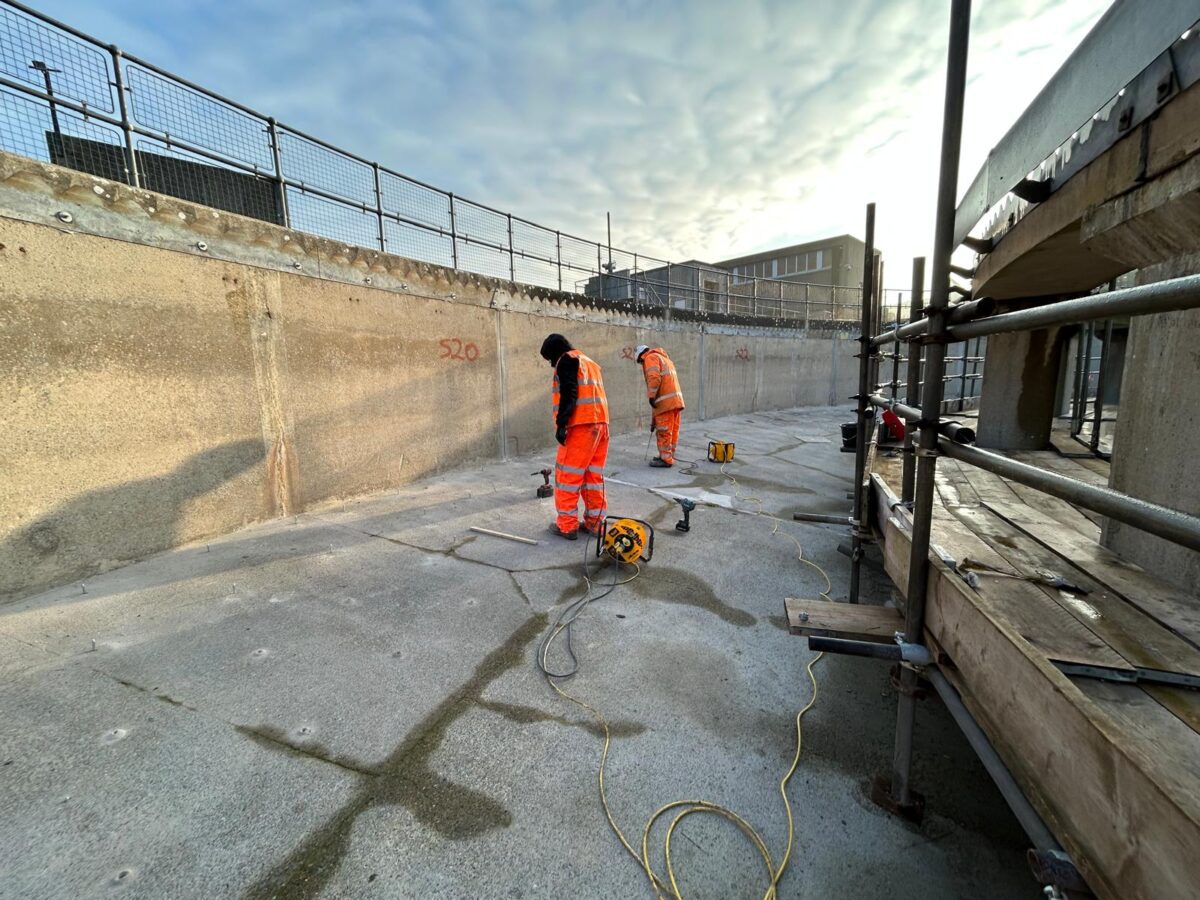
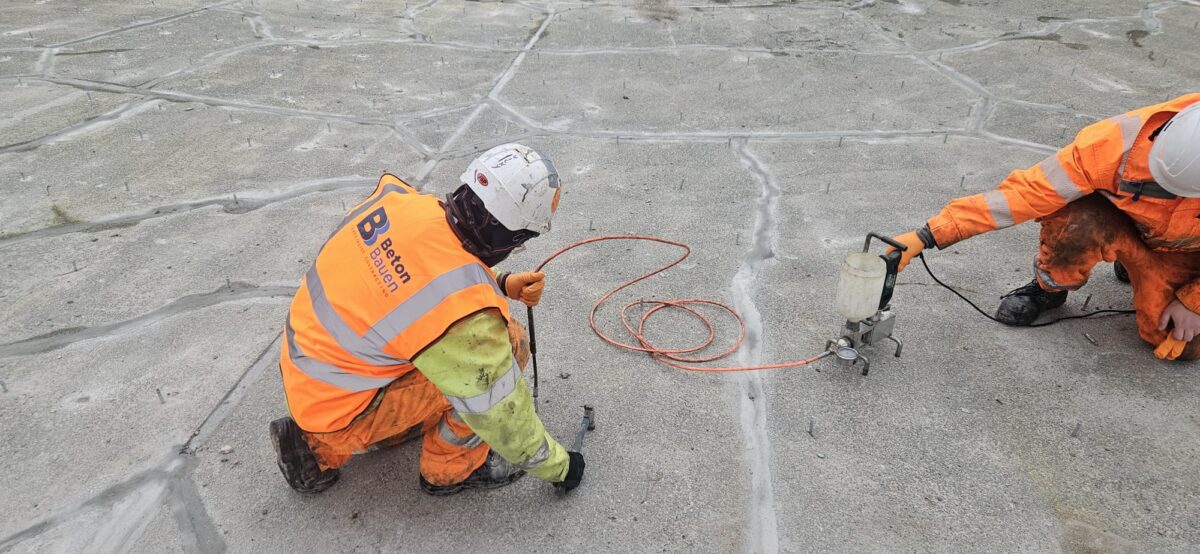
Prior to this process, precautions were made to manage containment of the resin before crack sealing to avoid water leakage and ensure that voids were correctly filled. In turn this aimed to prevent ‘sump’ and any subsequent (dirty water) contamination.
Beton Bauen concrete technicians deployed a PatchPin solution to act as an anchoring system whilst the resin was injected. This is to ensure that the slab did not lift further, and also to assist in the bonding process.
Issues Encountered
Once Beton Bauen successfully identified fundamental solutions for repairs and slab re-bonding, from a technical perspective, there were few issues. However, the size, timescale and weather/coastal conditions would all make managing this project somewhat challenging. Delivery of the works required close collaboration, not only with IPS (main contractor) but also with DCWW’s engineering and environmental teams, ensuring that all interventions aligned with operational requirements and regulatory standards.
Award Winning Project
At the CRA Awards in December 2025, held in Glasgow, Beton Bauen was shortlisted for CRA Small Project of the Year Award and won Innovation of the Year Award for the Slab Bonding on this project. A fantastic achievement for all involved.
The Product
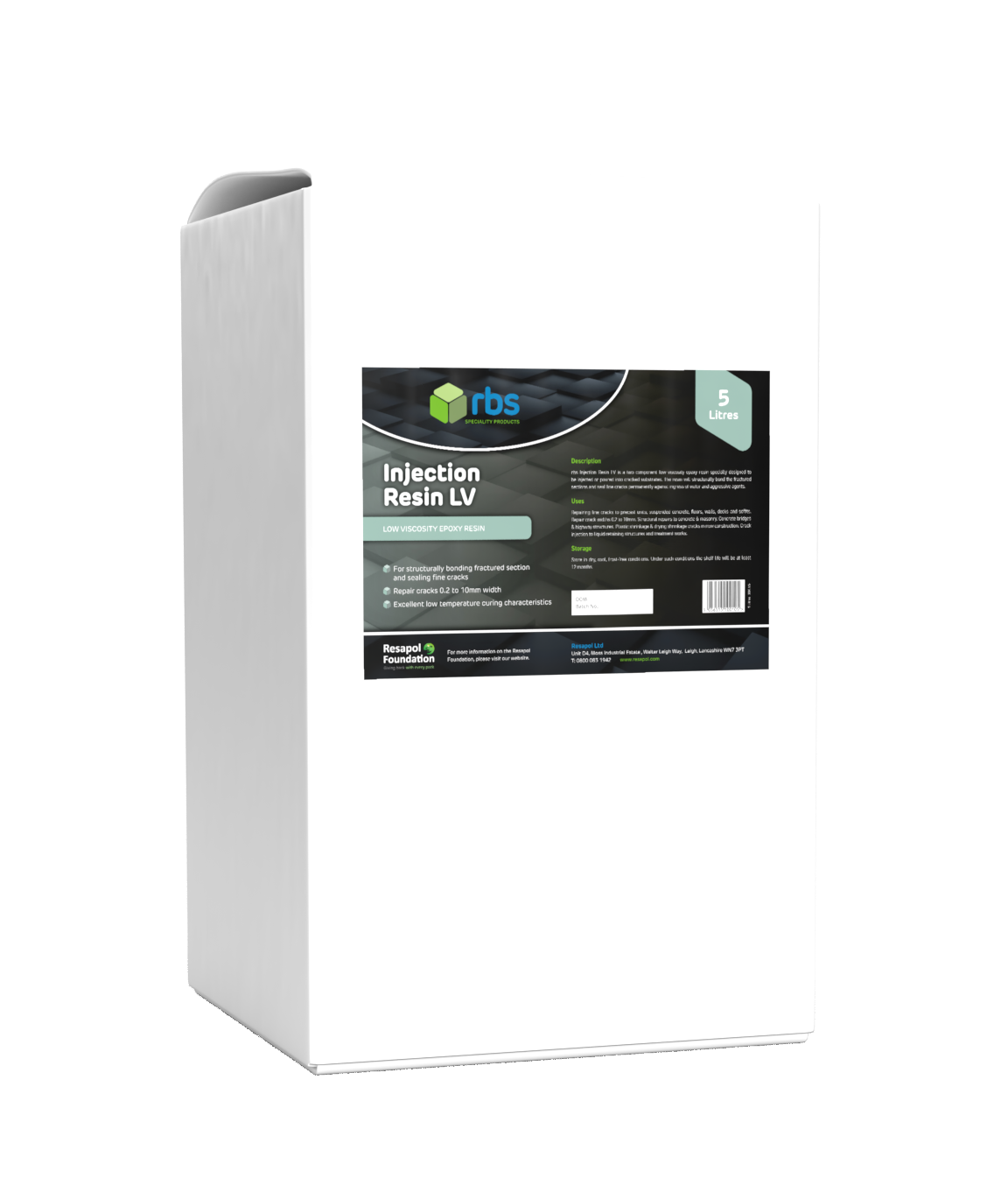
rbs Injection Resin LV is a two component low viscosity epoxy resin, specially designed to be injected or poured into cracked substrates. The resin will structurally bond the fractured sections and seal fine cracks permanently against ingress of water and aggressive agents. Complies with BS EN 1504-5.
Product Uses
- Repairing fine cracks to precast units, suspended concrete, floors & decks.
- Repair crack widths 0.1 to 10mm.
- Structural repairs to concrete & masonry.
- Crack repairs to concrete bridges, retaining walls and highway structures.
- Crack injection to liquid retaining structures and treatment works.
- Plastic shrinkage & drying shrinkage cracks in new construction.
- For grouting under machine base plates with dynamic loadings where gap thicknesses are 0.25 – 10mm.
- Suitable for all horizontal repairs including delaminated floors.
To download a copy of the Penybont Wastewater Treatment Works Case Study, click here.